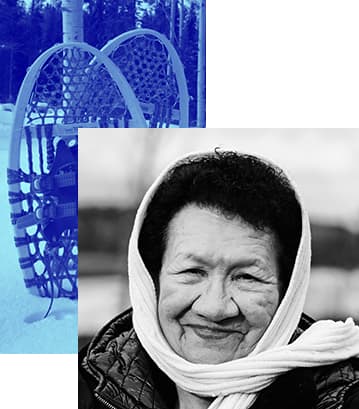
I remember fishing and going with my Dad and our dog team. My uncle, Hermase had two kids. We used to go put out snares for rabbits and traps for weasels. We loved it there. We had warm clothing. We had a good life - no shortage of anything.
For me it’s a spiritual space. It’s so relaxing, it’s like I’m back home when I’m there. I really, really enjoy going there. That’s where I grew up. That was home for lots of us. I’m 80 years old. I still go up every year by plane with my sisters to go berry picking. It’s our way of life. Me, when I get over there, it’s like I’m home - I can just sleep and relax.
That’s where I grew up, that’s my home. At Buffalo Lake I feel good. It’s peaceful and I can drink the water there. I can eat the berries. We have family there; all my kids and grandchildren. We teach our grandchildren to go fishing and clean the fish. They go hunting for ducks. We teach them as much as we can about our way of life. This is the only piece of land that is not destroyed by industry. If we have nothing left, we have no way to teach them our culture, our Indian rights.
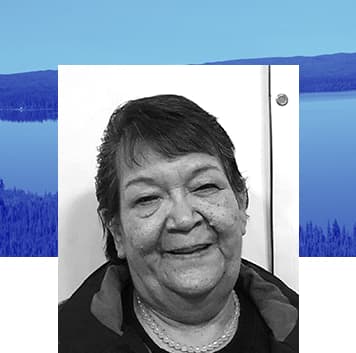
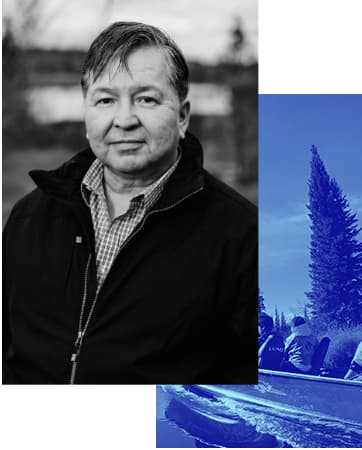
When I was maybe nine or ten, I went with my Dad and my uncles out to the trapline. It was minus 70 degrees Fahrenheit. I don’t even remember what clothes we had. We didn’t have the fancy parkas we have today. We took a dog team and that’s how we did it for the next two or three years. You had to pack everything you needed for a month– staples like salt, sugar, tea, your clothes, food for us and the dogs. A chocolate bar was a major treat. I spent a lot of time at Moose Lake, Tar Creek, up where CNRL is now. In my family, the emphasis was on hunting and trapping.
I introduced a young offenders program at Moose Lake. We took at-risk Indigenous youth out of the city, where they were headed for detention centres, into the bush. We stayed at the old camp, and we had an Elder, first aid, a counsellor. Their punishment was getting back to reality, back to basics, back home. Moose Lake brought those boys back home.
We have to maintain the core essentials at Moose Lake, make sure the berries and plants are the same as they were 100 years ago. That’s important. Maintain habitat not just for moose but for lynx and wolf. Even the air and rain at Moose Lake are important. They’re different. It’s 800 feet higher and everything is clean. You can drink fresh water and eat the fish off the lake. Home is always back in Moose Lake.
For me, being inspired by our past is still being able to go out to the land the way our ancestors did. I was born and raised on a trapline by my parents and grandparents. When I was a boy, fur prices were very strong and healthy. My father used to get $1,200 for a lynx pelt in the ‘70s; today, if you’re lucky, that’s $50.
The lands we hold sacred are almost all gone now. The Moose Lake area is the only place left for us to pass on traditions to our children.

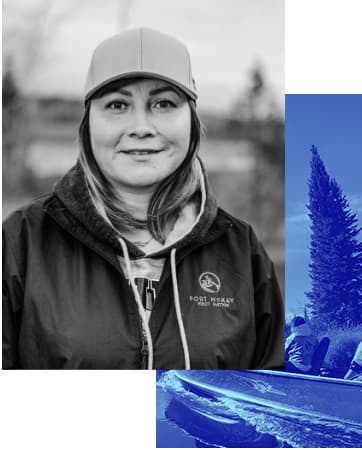
My Grandpa Philip McDonald, who was chief for close to 40 years, and my Granny went to Moose Lake and Buffalo Lake to do their harvesting every fall and winter. They’d take their kids. That’s where his trapline was. Everyone helped with the hunting, fishing, dressing the meat, cleaning the fish. They helped with everything.
My Grandpa passed away just before I was born but I remember going to Moose Lake with my Granny for a week or two starting when I was in Grade Two. She did that for as long as she could, even though, in the end, she had to fly in. My family has a cabin there now in almost the same spot that my grandparents’ place was.
It’s really important that we have that piece of land, of history, preserved, like our values, for our children. It’s vital they learn to be proud of their identity. That’s why Moose Lake is so important.
My Father and his brothers were hunters and trappers. They lived off the land at Spruce Lake when they were young. Each fall in my youth, we’d go up the Athabasca River to go hunting, fishing and gathering. We slept in a canvas tent and used spruce boughs for bedding. I can still recall their fresh smell. In ’96 I went to Moose Lake for the first time with our traditional skills youth camp.
Being together in a place our ancestors lived off the land thousands of years ago is very important to me. Moose Lake is a living example of our relationship with our history. It touches your heart and teaches respect toward the land.
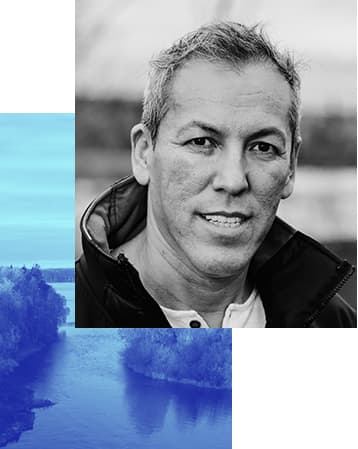
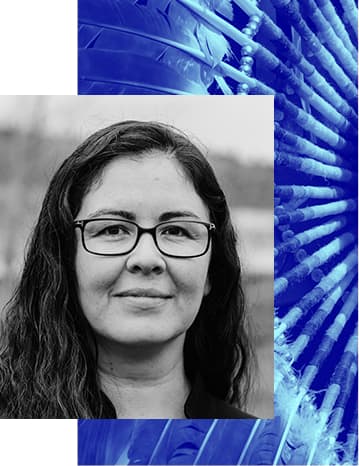
My mom taught me family connection means, yes, to be connected to your family but also, in our culture, it means to be connected to the animals, plants, land and our history.
The lands in Moose Lake are the training ground for our next generation, where we can share our oral history and pass on knowledge of the plants, medicines and animals. It is where we connect with the land and walk where our ancestors walked.
Responsible development is not a new concept. Traditionally, we always lived in balance. We take no more than the land can regenerate. We recognize and respect the ebbs and flows of nature and understand the negative impacts we can have if we take too much too soon.
When out on the land with my girls, I say “better take a picture,” because the next time we come out it may be gone. Moose Lake is the last place we have to connect with the land the way our ancestors did.
I started going out to Namur Lake when I was 14 years old. There were about a group of 10 young guys from the band that went out that year to learn how to build a cabin. Now, I build houses. That is what I do for work. Those skills I learned at Moose Lake have stuck with me.
For the last five years, I have been going up to Namur Lake every winter. We hunt, fish, and snare out there. A lot of the members are on foot and hunt the traditional way. We were taught at a very young age that we have to learn how to survive on the land. We were taught how to build a fire. How to build a lean-to. How to make a shelter in the snow. How to snare. We had to learn how to live out there in the bush.
I can't hunt where I learned to hunt. There are fences and signs up there now that say no shooting, but I still need to hunt. I grew up eating wild meat, and the elders live off of traditional foods. If you get three or four a moose a year, you are very lucky and that allows you to share a lot and keep a good amount. But sometimes you have to go out 10 to 14 times before you get even one moose. When industry comes in you, have to move further out to get the moose, and I think the population is declining.
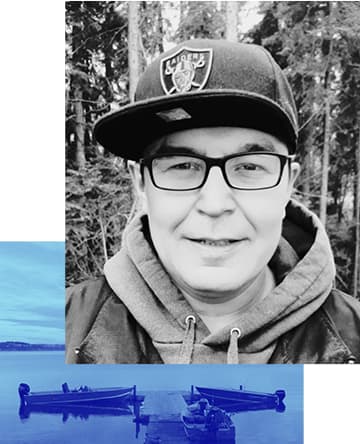
Our ancestors preserved our identity, language, traditional knowledge and culture – without technology, without paper – for generations based solely on lived experience and an oral history. It really inspires me, how they conducted themselves, making sure to pass those things on to their children. We need it to preserve our identity. We need roots; without roots, we’re lost.
But Moose Lake is a very unique area. It’s almost like the water is a life force out there that encourages these rare plants. This boreal forest is different from the Canadian Shield or the Prairies. For thousands of years it has had plentiful fish and game, diverse habitat. The plants we harvest there can’t be found just anywhere – they can’t even be found close to Fort McKay.
To be on traditional lands but not being able to harvest. That is one of my oldest memories of industry. I was 16-years old and I was out hunting and on the way home I stopped to chop and collect firewood for my grandparents by the side of the road. A security guard came by and said I couldn't do that on “their” land. I couldn't believe it. I was told I didn’t belong there. I had been going there since I was young. Doing the same thing, but then all of a sudden, things changed. The guard made me put all the firewood in the ditch. I had to unload the whole truck.
That experience really stuck with me. It had a lasting impression on me. I do not want my children to have those experiences.
Namur Lake is the place of my family. We didn't just claim rights to the land in the last 10-15 years. We have been here for generations.
Hunting provides food for my children. I hunt one or two moose a year. This is a good amount of moose meat for my family, but I also share with the elders. That is part of our culture, when you go hunting and fishing, it is for the whole community.
I don't hunt where there is noise or gates. If there are people and activity is going on in the area, you have to avoid the whole area for safety reasons. You follow the animals and they don't have boundaries except for when they hit industry.